SEND reform – a tightrope without a safety net
It’s late afternoon on Friday and you’re done for the week. So read this instead

Apparently it’s all kicking off in Westminster but you’ve run out of things to say about it – and while Labour works through its issues, the world keeps turning and so does the machinery of government.
And so it is that the public consultation into the government’s SEND (special educational needs and disabilities) reforms closes next week, and that’s what I’m focusing on today – although I’ll also touch on the potential implications of the leadership ructions for these reforms at the end.
We didn’t mean to go to hell
The key thing about the current SEND crisis is that it started with good intentions.
In 2014 the coalition government passed the Children and Families Act. It increased the upper age at which children and young people could receive statutory SEND support from 19 years old to 25, and formalised support in pre-school.
This was the era of David Cameron, George Osborne, Eric Pickles and Iain Duncan Smith, of vicious benefit cuts and savage raids on local government funding, of Nick Clegg Says I’m Sorry (The Autotune Remix). Amid all that, here was the government doing something that was, in the most basic meaning of the word, “good”.
But they didn’t put enough money in. For once, that wasn’t the austerity reflex at work – they just didn’t realise how much they’d need, because they hadn’t done their homework. The National Audit Office reported in 2019 that the Department for Education (DfE) “did not fully assess the likely financial consequences of the 2014 reforms”.
The DfE “expected that the benefits and savings would significantly outweigh the costs of moving to the new system”, the NAO said. The DfE assumed that greater cooperation between different agencies and more engagement with parents would save money. It expected fewer challenges to council decisions about SEND supports under the new system, with more of these settled through mediation.
Instead, the number of SEND tribunal cases rocketed by 80% between 2014/15 and 2017/18. Funding for high needs education rose by 7.2% in real terms in that time – but the number of children with education, health and care plans (EHCPs, which set out legally mandated SEND support) rose by 10%, meaning that high need funding per pupil actually fell.
The rest you already know – council overspends on their SEND budgets exploded, special schools filled up and developed long waiting lists, and children with high needs were left without support, and sometimes without any schooling at all.
Which brings us to 2026.
Labour’s proposed SEND reforms promise more funding to support SEND children in mainstream schools, a more streamlined process to meet all but the severest needs, more training for mainstream school staff to cater to SEND children, £3.7bn in capital funding to adapt the mainstream school estate to meet SEND needs, and a new Experts at Hand service to make SEND-oriented specialist professionals, such as educational psychologists, available to mainstream schools.
As a result, more SEND children will be able to be taught in inclusive mainstream schools, with special school provision for those who need it, while the adversarial nature of the current system – which frequently sees parents dropping out of paid work to fight full-time legal and bureaucratic battles to wring droplets of support from underfunded and bottlenecked institutions – will be consigned to history.
All good intentions, right?
Hurry up and get to the “but”
But there’s a problem – and if your memory stretches as far back as the start of this post, it’s a familiar one. The government isn’t putting enough money in to make this work.
Take the Inclusive Mainstream Fund (or IMF – insert your bailout jokes here). This new funding stream is meant to enable mainstream schools to support more SEND children without the need for special school provision. The IMF is often written up in shorthand as a way to fund extra teaching assistants, but the DfE sees its role much more broadly – it recommends seven “themes of activity” for schools to spend the money on, including early intervention, attendance and behaviour practices, data collection and peer review, and provision beyond the classroom.
The IMF is worth £1.6bn. That’s a lot of money – except that’s over three years, and covers every mainstream state school in England. The first annual tranche for 5-16-year-olds will be worth £400m in 2026/27.
What does that £400m amount to when spread across so many schools? In late March the DfE published an IMF “calculator” – an Excel spreadsheet you can download and enter a school’s registration number to find out any school’s provisional IMF allocation for 2026/27. But they’re not going to publish a full list until the allocations have been finalised, apparently sometime this month.
So I decided to take the registration number of each school and enter it into the spreadsheet calculator, before noting down its provisional IMF allocation for 2026/27.
I did that 19,857 times.
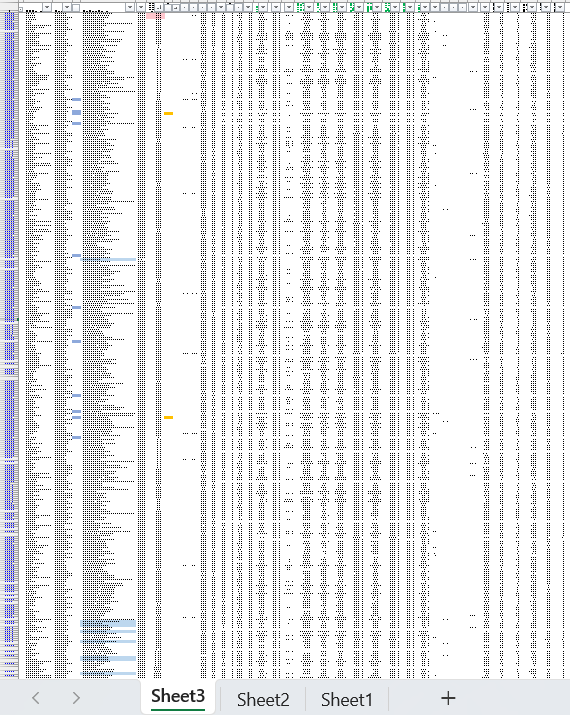
It took about 20 hours of solid, plus probably another 15-20 hours cleaning and checking the data and merging it with DfE spreadsheets showing school demographic and financial data.
I’ve written a lengthy piece on my findings for Schools Week, but to summarise:
· primary schools are set to receive £13,485 on average, with secondary schools in line for an average allocation of £47,531
· 1,399 small primary schools stand to get less than £6,000
· 331 secondary schools are set to receive less than £24,400, which is roughly the cost of an entry-level full-time teaching assistant
These IMF allocations amount to 1.6% of primary schools’ average spending on teaching staff in 2024/25 – and just 1.1% for secondary schools. They amount to 0.6% to 0.7% of their total annual income that year. In terms of overall school budgets, it’s peanuts.
None of the headteachers I spoke to for the article felt their allocation would be anything like enough to meet the IMF’s stated goals. They all welcomed any new funding, but they all saw this as effectively chipping in a bit of money – one head told me it would do no more than enable his school to just about set a balanced budget. Another said that his school’s £7,700 amounted to around a day and a half of additional support staffing – a role that would be hard to fill in his rural school.
It’s not just the IMF. There are concerns over whether school staff actually have time to train adequately to support SEND children – and whether training providers have time either. The £3.7bn capital investment is bigger, but some badly stretched councils fear they’re being shortchanged, and there are also concerns that schools will simply create rooms in which to dump SEND children when they get overwhelmed. Nor is it clear that there are enough specialist professionals to populate the Experts at Hand service.
Trust us, bro
All of this is happening at the same time that the government tries to water down the rights of parents within the system. The government’s plans will raise the bar on qualifying for an EHCP – indeed, the DfE’s modelling suggests one in eight children with EHCPs will end up transitioning to “individual support plans” (ISPs) for those whose needs do not meet the newly raised EHCP threshold.
Those ISPs won’t be legally enforceable like EHCPs are – or at least, are supposed to be. SEND legal charity IPSEA has warned that “a school having a legal duty to produce an ISP is not the same thing as a child having a legal right to receive specified provision or to challenge the contents of an ISP”. Tribunals will no longer be able to name a particular school or college that a young person must be allowed to attend, which is currently a key legal recourse for parents wanting specialist provision.
The government’s line is that this doesn’t matter – its reforms will improve inclusion in mainstream schools so legal recourse isn’t needed so much anymore, and in any case, isn’t the point to take the conflict out of the system? We want to hold hands, right? Don’t you want to hold hands?
But there’s a contradiction here, and SEND parents know it. If the government’s reforms work as planned – if mainstream schools are well-resourced and genuinely inclusive, and ISPs meet most SEND children’s needs – then the need for EHCPs and special schools will naturally decline, conflict will dissipate, so there’ll be no cause for restricting parents’ legal rights.
But if the reforms don’t work out – because, for example, they’re underfunded like they were last time – then taking away that legal recourse is removing an essential safety net for SEND children, tattered though it doubtless is.
As IPSEA chief executive Madeleine Cassidy told a SEND protest in London last weekend: “If it’s this hard when we have rights, what will it be like when we don’t?”
Why remove the safety net? I think primarily it’s about cost – but not in the sense of spending cuts. The government, after all, is increasing spending on SEND, just as the last government did.
But what the government is also doing is taking those heaving SEND deficits off the books of local authorities – who are the big winners from the SEND reforms. Responsibilities will shift downwards to schools via ISPs, and upwards to central government via the costs of EHCP-funded support.
Until now, big overspends on SEND budgets have been borne by councils. In future, they would be borne by central government. And by restricting parents’ legal rights, I believe the government is looking to make SEND costs more predictable – a bigger funding pot, but also a more controlled one.
Looking at the state of government finances and borrowing costs, I get where they’re coming from. But it’s SEND children and their parents who are being made to carry the risk of the government’s SEND reforms failing.
If those reforms work, the “costs” of maintaining legal recourse would be minimal. If those costs are meaningful, it’s because the reforms haven’t worked, and removing those rights will have a disastrous effect on SEND children.
So which is it, Bridget?
Andy Burnham Will Say He’s Sorry (The Autotune Remix)
Which brings us to the Labour leadership.
A leadership election throws things into flux. It would bring an opportunity for SEND campaigners to try and drive the candidates to break with the government on this issue – to commit to restoring those legal rights, for example, or to seek more funding for some of the key plans of the reform package.
That matters, because that’s the most obvious window in which the government could be made to change tack. If a new prime minister decides to stick with the plans and brings them to a parliamentary vote, the chances of a significant Labour rebellion against a leader and prime minister they’ve only just elected are extremely low.
And that would leave us facing the risk of going through the motions of yet another SEND crisis, culminating a decade from now with more reports and more regrets and more reforms.

I found a Commons speech by the Labour MP for Cambridge about problems in the SEND system. They spoke of “inadequate levels of resources from central government”, of teachers being overwhelmed by unaddressed SEND needs in the classroom to the detriment of other children without special needs.
They described the “consensus” that greeted the previous reforms, with SEND children taught “in mainstream schools through individual attention, learning support assistance and specialist teaching” and reduced use of special schools – but said “the inadequate level of resources is the primary reason for the problems that we are experiencing in special needs education”.
They warned of the impact of capping spending on education; and of “the increasing number of children in our society who have emotional and behavioural problems”. And they said that it had not been the "intention” of the existing laws “to create a situation in which parents and schools compete with each other to get their children” specialist, legally enforceable support “to secure the resources that they need”.
That Labour MP for Cambridge was not Daniel Zeichner, the Labour MP for Cambridge in 2026. It was Anne Campbell, the Labour MP for Cambridge on 3rd July 1992. The existing law she was referring to was not the 2014 Act, but the Education Act of 1981.
Let’s not go round again.
This is really interesting. I’ve know that SEND is a drain on local authority finance but never really understood how it works.
Though I’ll admit my biggest take home from this is “you did that 19,000 times?”
Thank for writing - interesting piece. I hope you didn't really enter all those school references into Excel yourself. If you did and something similar comes up again in the future, send me a message as I may be able to help - automating Excel is something I'm pretty good at.